

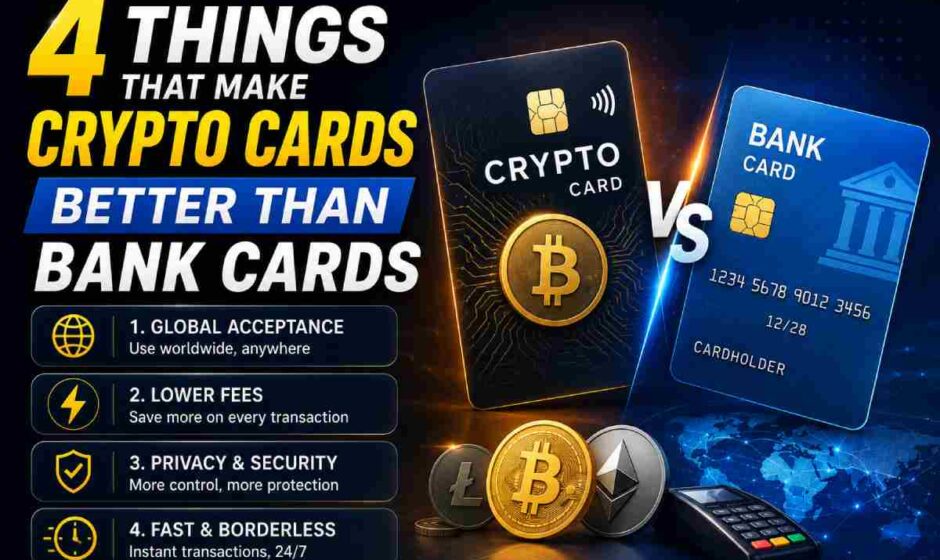

Most people still carry a traditional bank card without questioning whether it actually serves them well. But the financial landscape has shifted. Crypto cards have moved from a niche curiosity to a genuinely practical tool, and millions of users now prefer them over conventional options. The reasons go beyond novelty. From better rewards to stronger security, crypto cards offer advantages that bank cards simply cannot match. Here are four things that make crypto cards the smarter choice for today’s spender.
Superior Rewards and Cashback Opportunities
Traditional bank cards have long advertised cashback programs, but the returns are often modest, typically hovering between 1% and 2% on everyday purchases. Crypto cards, by contrast, tend to offer significantly higher reward rates, often in the form of cryptocurrency rather than points or miles. DeCard, for example, structures its rewards so that users receive cashback directly in digital assets, which means the value of those rewards can appreciate over time rather than stay flat. This is a fundamental difference that many bank card holders overlook.
For a user who spends consistently on everyday categories like groceries, travel, and dining, the compounding effect of crypto cashback can be substantial. Instead of redeeming points for a gift card at a fixed value, they hold assets that may grow. Plus, many crypto card programs offer tiered rewards, so users who stake or hold a certain amount of the platform’s token unlock progressively better rates. The reward structure is simply more dynamic and potentially more profitable than what any standard bank card provides.
Greater Global Access and Multi-Currency Flexibility
Travelers and remote workers know the frustration of foreign transaction fees. A standard bank card charged abroad can quietly add 2% to 3% on every purchase, and currency conversion rates are rarely favorable. Crypto cards address this problem in a direct way.
Because they operate on blockchain infrastructure, many crypto cards allow users to spend across borders without the same layers of fees. Some cards let users hold multiple currencies in a single account and choose which one to spend at checkout. This kind of flexibility is simply not available with a traditional bank card.
For someone who splits their time between countries, or who frequently shops from international retailers, this matters enormously. The ability to convert and spend digital assets in real time, at a competitive rate, means they keep more of their money. Besides, crypto cards are not restricted by the same banking regulations that limit where and how a bank card can be used. This makes them accessible in regions where traditional financial infrastructure is limited or unreliable.
Enhanced Security Without Sacrificing Convenience
Security is a common concern for anyone considering a new payment method. Bank cards rely on centralized systems, which means a single breach at the bank’s level can expose thousands of accounts at once. Crypto cards take a different approach.
Blockchain-based transactions are cryptographically secured, and users typically maintain control over their own assets rather than trusting a central institution to hold them. Many crypto cards also offer features like instant card freezing, spending limits, and virtual card numbers for online purchases. These tools give users a level of active control that most bank cards don’t offer by default.
Plus, because crypto transactions are verified through decentralized networks, the risk of a centralized data breach affecting a user’s funds is considerably lower. For users who are cautious about identity theft or card fraud, this represents a genuine improvement. Convenience is not sacrificed in the process, either. These cards work at standard point-of-sale terminals and online checkouts, so the security upgrade comes without any disruption to everyday use.
The Potential to Grow Your Spending Power
A bank card draws from a fixed balance. The money in the account is the money available to spend, and it earns little to nothing in return. Crypto cards, but, are often connected to holdings that have the potential to grow.
A user who holds cryptocurrency as part of their spending balance is not simply sitting on idle funds. They are exposed to market appreciation, which means their available spending power could increase over time. This does not mean reckless speculation. For users who already hold digital assets and would prefer not to liquidate them into a traditional bank account, a crypto card offers a practical middle ground. They can spend when needed and hold when the timing suits them better.
Some platforms also allow users to earn yield on staked assets while still maintaining access to those funds through a card. In effect, their spending balance works harder than any savings account a bank would offer. For the financially aware user, this kind of integration between savings, investment, and spending is a meaningful advantage.
What to Watch Out for Before Switching
Crypto cards offer genuine advantages, but they are not without trade-offs. Anyone considering a switch should go in with a clear picture of what to expect.
Volatility is the most obvious factor. If a user holds their balance in cryptocurrency, a sudden drop in value can reduce their available funds faster than any bank fee ever would. This is a real risk, and it requires either a tolerance for market swings or a strategy for managing exposure through stablecoins or diversified holdings.
Regulatory uncertainty is another consideration. Crypto card programs operate in a space that governments and financial regulators continue to evaluate. The rules around crypto spending and taxation vary widely by country, and they can change. Users need to understand their local tax obligations when they spend digital assets, as each transaction may be treated as a taxable event.
Finally, not every merchant or payment network accepts all crypto cards in the same way. Coverage has improved considerably, but it is still worth confirming compatibility before fully replacing a bank card.
Fees, Exchange Rates, and Staking Requirements
Beyond the big-picture risks, users should review the fine print on fees. Crypto cards sometimes carry monthly maintenance fees, ATM withdrawal charges, or penalties for inactivity. Exchange rates applied at the point of conversion can also vary between providers, and the difference can add up over time.
Many crypto card programs require users to stake a certain amount of the platform’s native token to unlock the best rewards tiers. While this can be worthwhile for committed users, it does represent a capital commitment. Before choosing a card, a user should calculate whether the rewards they stand to earn outweigh the staking requirement and any associated fees. A clear-eyed comparison on these points will determine whether the card is a good fit.
Conclusion
Crypto cards have matured into a compelling alternative to traditional bank cards. The rewards are more dynamic, the global flexibility is broader, the security model is stronger, and the potential for spending power growth is real. For users who already operate in the digital asset space, making a card a part of that ecosystem is a logical step. The key is to understand the trade-offs clearly and choose a product that aligns with one’s financial habits and goals.