

For decades, large enterprise accounting systems dominated finance departments. They were powerful, deeply embedded, and—let’s be honest—often slow to adapt.
Now? Something different is happening.
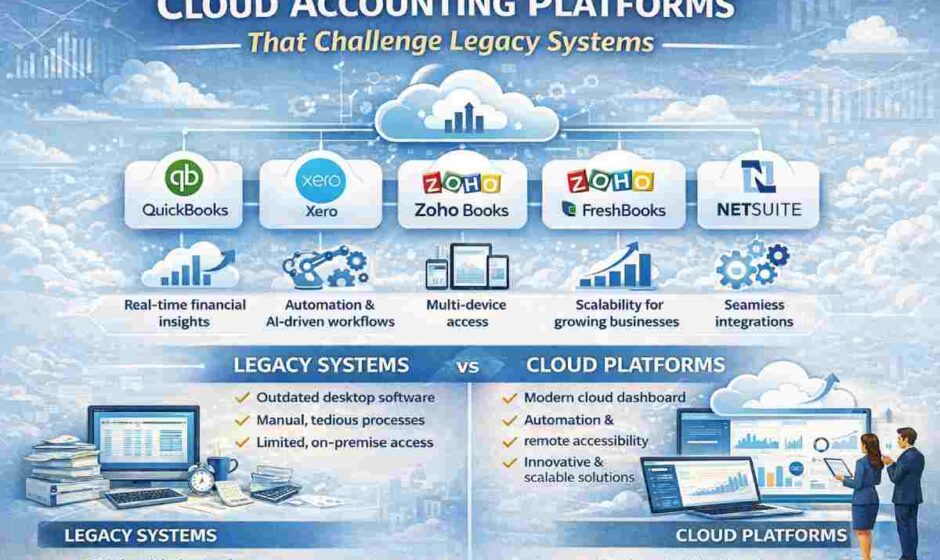
Cloud accounting platforms are no longer niche tools for small businesses. They’re competing head-to-head with traditional systems, offering faster insights, smarter automation, and easier integrations. Founders, CFOs, and finance teams are paying attention—and many are switching.
So what’s driving this shift? And why are legacy systems starting to feel… outdated?
Let’s break it down.
The Rise of Cloud Accounting
Cloud accounting didn’t appear overnight. It grew alongside broader digital adoption trends, especially among startups and SMEs.
According to the OECD report on SME digital transformation, over 60% of small and medium-sized businesses now use at least one cloud-based solution, including accounting and ERP tools. That’s a major shift from just a decade ago.
And it’s not just adoption for the sake of it. Companies using cloud systems report productivity gains of 10–25% compared to those relying on older setups.
Why?
Because cloud tools remove friction.
No installations.
No hardware dependencies.
No waiting weeks for updates.
Just access—anytime, anywhere.
Even the market size reflects this momentum. According to Allied Market Research, the cloud accounting sector was valued at $3.5 billion in 2023 and is expected to hit $7.0 billion by 2032, growing steadily at 7.8% annually.
That’s not hype. That’s demand.
Key Features That Set Cloud Platforms Apart
Cloud accounting tools aren’t just lighter versions of enterprise systems. They’re built differently from the ground up.
Real-Time Financial Reporting
Waiting for month-end reports? That’s becoming a thing of the past.
Cloud platforms provide live dashboards where financial data updates instantly. CFOs can track cash flow, revenue trends, and expenses as they happen—not weeks later.
One glance.
Clear picture.
And that changes decision-making.
Automation That Actually Saves Time
Manual entries still exist—but far less than before.
Cloud systems automate:
- Invoice generation
- Expense categorization
- Bank reconciliations
- Payroll processing
According to the ASEAN Federation of Accountants report, firms using digital accounting tools saw efficiency improvements of up to 30% in financial reporting cycles.
That’s not just convenience—it’s time back for strategy.
Integrations with the Tools You Already Use
This is where cloud platforms shine.
They connect easily with:
- CRM systems
- Payment gateways
- E-commerce platforms
- HR and payroll tools
Instead of siloed data, everything flows together.
No duplicate entries.
No messy exports.
Just connected systems.
Accessibility Across Teams
Finance isn’t confined to one department anymore.
Cloud accounting allows:
- Founders to check financials on their phones
- Finance teams to collaborate remotely
- External auditors to access records securely
It’s flexible. And that matters for distributed teams.
Why Cloud Platforms Are Winning Over Legacy Systems
Let’s talk about the comparison.
Legacy systems still have their place, especially in large enterprises with complex needs. But for many businesses—especially growing ones—they come with trade-offs.
Cost and Setup
Traditional systems often require:
- Expensive licenses
- Dedicated servers
- Long implementation timelines
Cloud tools? Subscription-based. Faster to deploy. Lower upfront cost.
Simple.
Speed of Innovation
Legacy platforms update slowly. Cloud platforms update constantly.
New features roll out regularly—sometimes without users even noticing.
That pace matters when regulations change or business models evolve.
Flexibility for Growing Businesses
Startups don’t stay small for long.
They need systems that scale with them—not systems that need replacing every few years.
That’s why many are exploring accounting platforms similar to NetSuite—tools that offer enterprise-level capabilities without the complexity or cost of traditional setups.
It’s about getting power without the baggage.
Better Decision-Making
Here’s where things get interesting.
A study published in Humanities & Social Sciences Communications found a statistically significant link between cloud accounting adoption and improved financial decision-making performance.
Why?
Because better data leads to better decisions.
Faster insights.
Clearer trends.
Less guesswork.
Adoption Trends Across Industries
Cloud accounting isn’t limited to tech startups anymore.
It’s spreading across industries.
SMEs Leading the Way
Small and medium-sized businesses are adopting cloud tools faster than large enterprises.
But there’s still a gap.
The OECD reports that large firms are 20–30 percentage points more likely to use advanced cloud solutions compared to smaller ones.
That gap is closing, though.
Fast.
ASEAN Markets Embracing Digital Finance
In Southeast Asia, adoption is accelerating.
According to the AFA study, over 60% of surveyed firms have already implemented cloud-based accounting systems.
And the results?
- Faster reporting cycles
- Improved operational efficiency
- Better compliance tracking
It’s not just adoption—it’s impact.
MSMEs Linking Cloud to Sustainability
A 2024 study published via ResearchGate found a strong connection between cloud accounting and long-term business sustainability.
Firms with a clear digital strategy showed:
- High adoption rates (path coefficient = 0.822)
- Strong links to economic sustainability (0.801)
In simple terms?
Cloud accounting isn’t just about efficiency—it supports long-term growth.
Why Startups and Digital Businesses Prefer Cloud Solutions
Let’s zoom in on startups.
Why are they choosing cloud accounting almost by default?
They Need Speed
Startups move quickly.
They can’t wait months for system setup or deal with rigid workflows.
Cloud tools are ready almost immediately.
Sign up. Configure. Go.
They Value Flexibility
Business models evolve.
Pricing changes. Revenue streams shift. Teams grow.
Cloud platforms adapt without requiring a full system overhaul.
They Operate Remotely
Distributed teams are the norm.
Cloud accounting allows finance teams to collaborate from anywhere—without compromising access or security.
They Want Data Now, Not Later
Startups rely on data to survive.
Burn rate. Runway. Revenue growth.
Cloud tools provide these insights instantly, helping founders make quick, informed decisions.
The Future: Competition Is Heating Up
Legacy systems aren’t disappearing.
But they’re under pressure.
Cloud platforms are closing the gap in functionality while maintaining their advantages in flexibility and usability.
What does the future look like?
Hybrid Approaches
Some enterprises are blending systems—keeping legacy infrastructure while integrating cloud tools for specific functions.
It’s a transitional phase.
Smarter Automation
AI-driven features are becoming more common:
- Predictive forecasting
- Automated anomaly detection
- Smart expense categorization
Less manual work. More insight.
Deeper Integrations
Accounting platforms are becoming central hubs—connecting finance with operations, sales, and strategy.
Not isolated tools.
Connected ecosystems.
More Competition, More Choice
As demand grows, more vendors enter the space.
That’s good news for businesses.
More options.
Better pricing.
Faster innovation.
Conclusion
Cloud accounting platforms have moved far beyond simple bookkeeping tools. They now compete directly with traditional enterprise systems—and in many cases, they’re winning.
They offer:
- Real-time visibility into financial data
- Automation that reduces manual effort
- Easy integrations across business systems
- Flexibility that supports growth
At the same time, data from organizations like the OECD, AFA, and Allied Market Research shows clear trends: adoption is rising, productivity is improving, and businesses are seeing measurable benefits.
Legacy systems still serve a purpose, especially in complex enterprise environments. But for startups, digital-first companies, and even many mid-sized firms, cloud solutions offer something compelling—speed, clarity, and adaptability.
And that’s hard to ignore.
As competition intensifies, one thing is certain: accounting is no longer just about recording numbers. It’s about understanding them—faster, better, and in ways that support smarter decisions.
The shift is happening. The question is—where does your business stand?
Also Read: The Role of SEO in Digital Visibility for Modern Businesses